


Cube Storage
The core idea of Cube Storage is to fit as many bins as possible into a small footprint. Here you will learn when this is worthwhile for your warehouse, how AutoStore and other Cube Storage systems differ, and how you can estimate the costs for your project.
Reports on this topic

Webevents on this topic

Matching solutions (33)
View all solutions →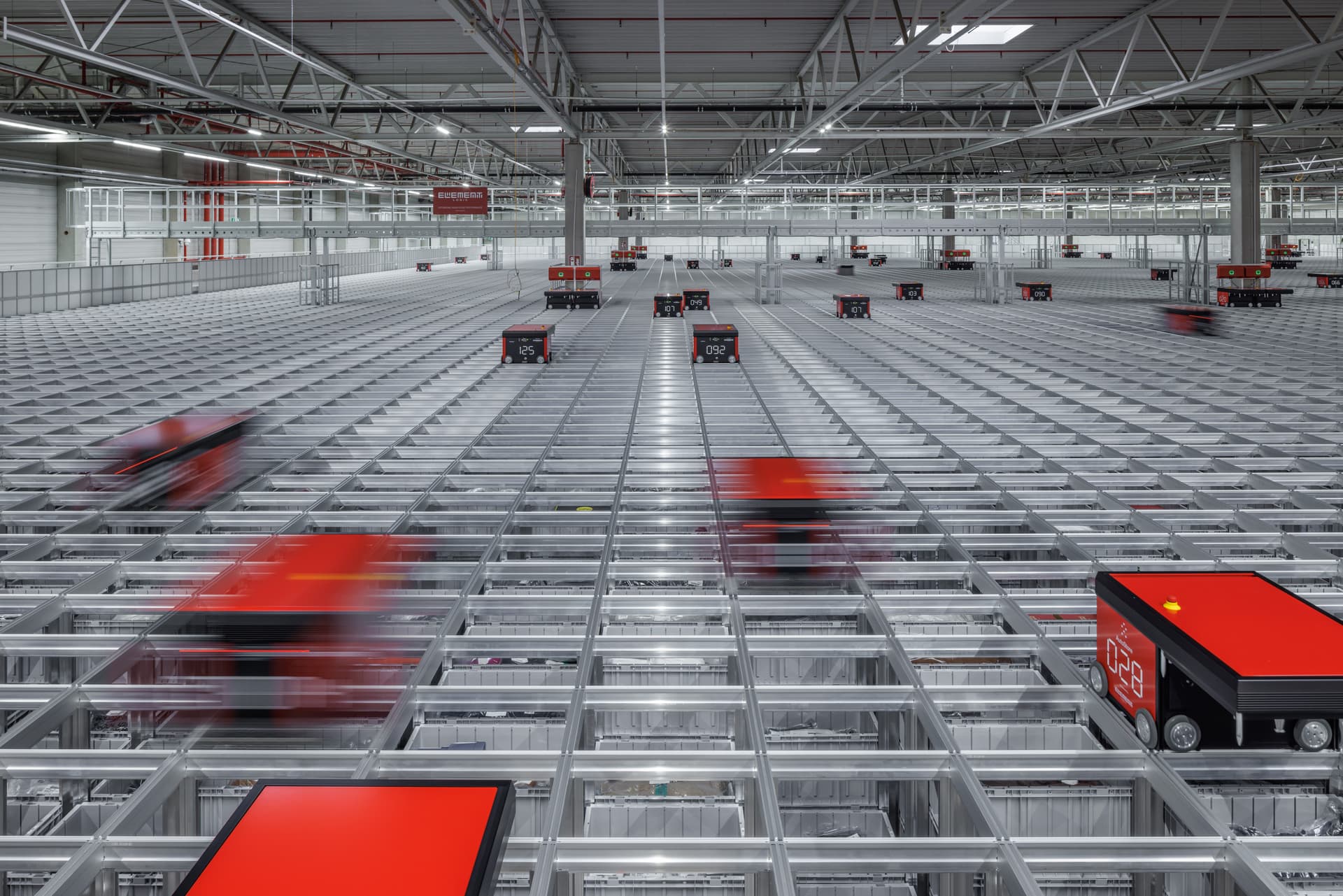 Hardware
 AutoStore™AutoStore™4.6(7)
 Service
 AutoStore-Systemintegration & IntralogistiklösungenElement Logic Germany GmbH4.9(12)
 Service
 Cube Storage - AutoStore™ empowered by KardexKardex Holding AG5.0(1)
 Hardware
 PowerCubeJungheinrich5.0(1)
 Hardware
 GEBHARDT Versastore®GEBHARDT Fördertechnik GmbHNo reviews yet
 Software
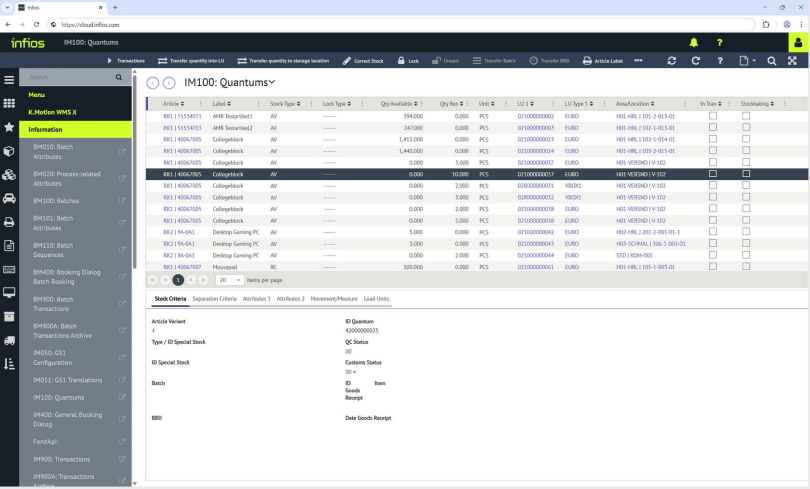
 Warehouse Management Systems - WMS XInfios GmbHNo reviews yet
 Software
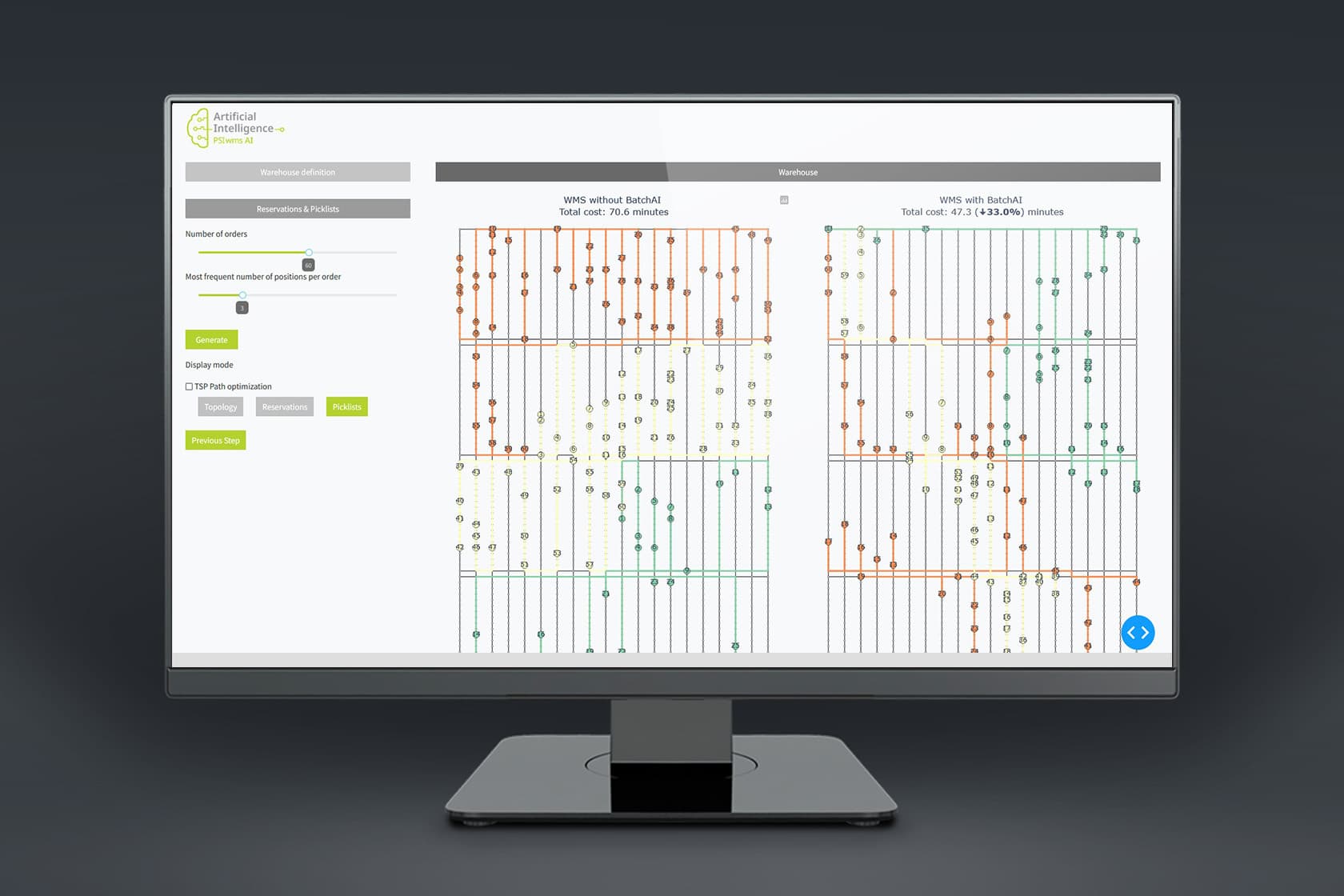
 PSIwmsPSI Software SE - Business Unit LogisticsNo reviews yet
 Software
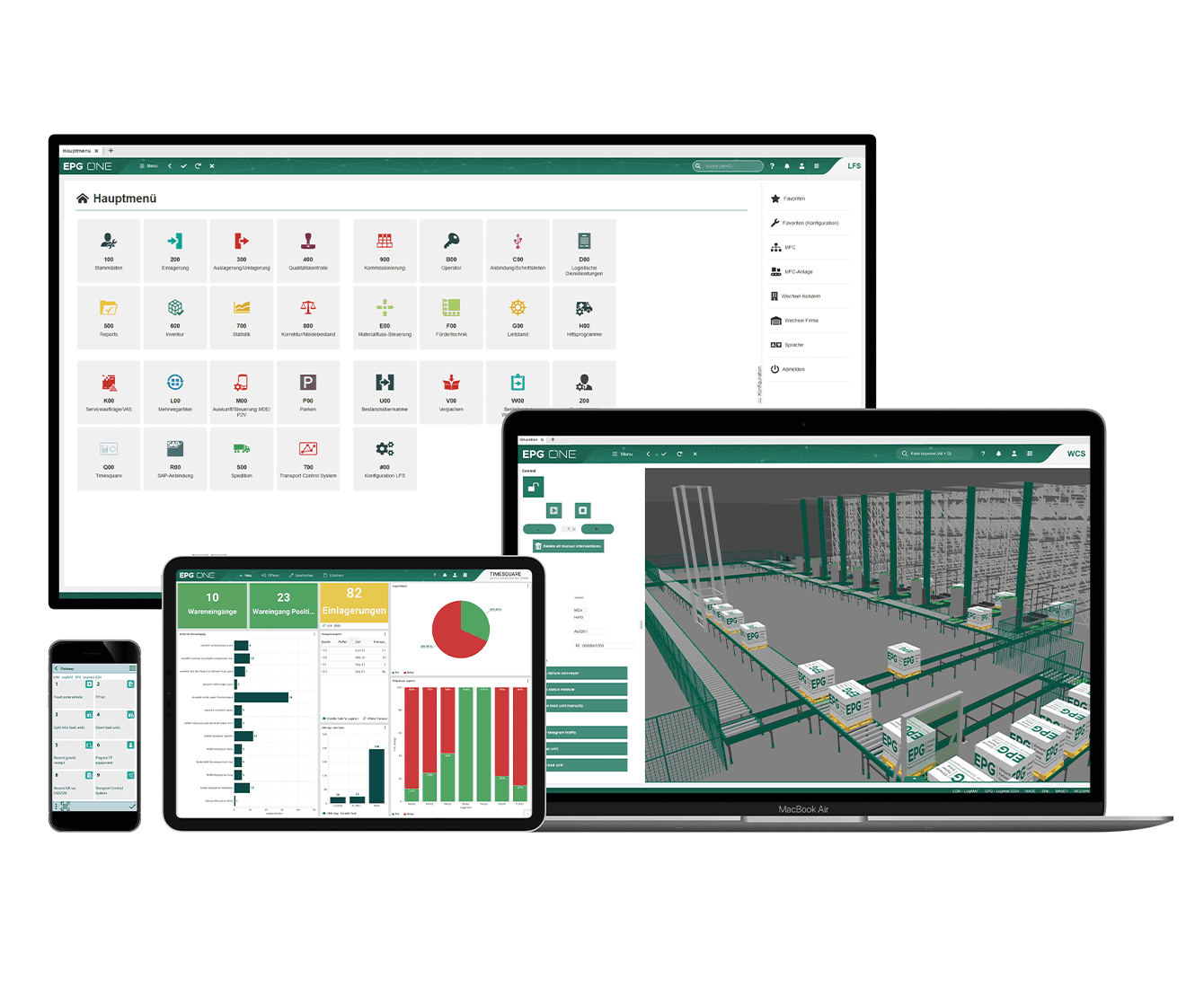
 EPG Lagerführungssystem (LFS)EPG Ehrhardt Partner Group4.0(2)
 Hardware
 Rocholz Packtisch SYSTEM FLEX – Flexibel arbeiten. Besser packen.Rocholz GmbH5.0(1)
 Hardware
 Core Robotic Picking SystemBerkshire GreyNo reviews yet
Articles on this topic

How to plan an AutoStore system. Answers from the even Webinar with AutoStore
From the first key figures to the finished grid design: how requirements become a warehouse system.
AutoStore System in Detail: Components, Partners, Planning. A Guide for Decision-Makers
Understanding AutoStore: Everything about robots, ports, planning and integrators. For logistics managers, IT leads and project planners

Who Are Automated Small Parts Warehouses Suitable For?
How AKLs work, what advantages and disadvantages they offer, and which industries can benefit from them.
Case studies on this topic

Terms on this topic
To the glossary →- AutoStore
- AutoStore is a cube-based automated storage system in which driverless robots traverse an aluminum grid to stack plastic bins and retrieve them on demand for delivery to picking ports. The system is considered one of the most space-efficient automated small-parts warehouses available for standardized bin-compatible goods.
- AutoStore-Lagersystem
- The AutoStore storage system is a fully automated cube storage system in which robots stack, retrieve, and transport plastic bins across a three-dimensional grid structure to stationary picking stations.
- Cube-System
- A cube system is a high-density, grid-based storage system in which bins are stacked in a three-dimensional grid and moved by robots. It is particularly suited for small to medium-sized items with high throughput in limited storage space.
- WMS
- A Warehouse Management System (WMS) is a software solution for the operational control and management of all warehouse processes – from putaway and picking to goods issue. It coordinates storage locations, inventory, resources, and staff deployment in real time.
- WCS
- A Warehouse Control System (WCS) is control software used in intralogistics that acts as an intermediary between the Warehouse Management System (WMS) and the programmable logic controllers (PLCs) of individual systems. It coordinates material flow across conveyor and automation technology in real time.
About this topic
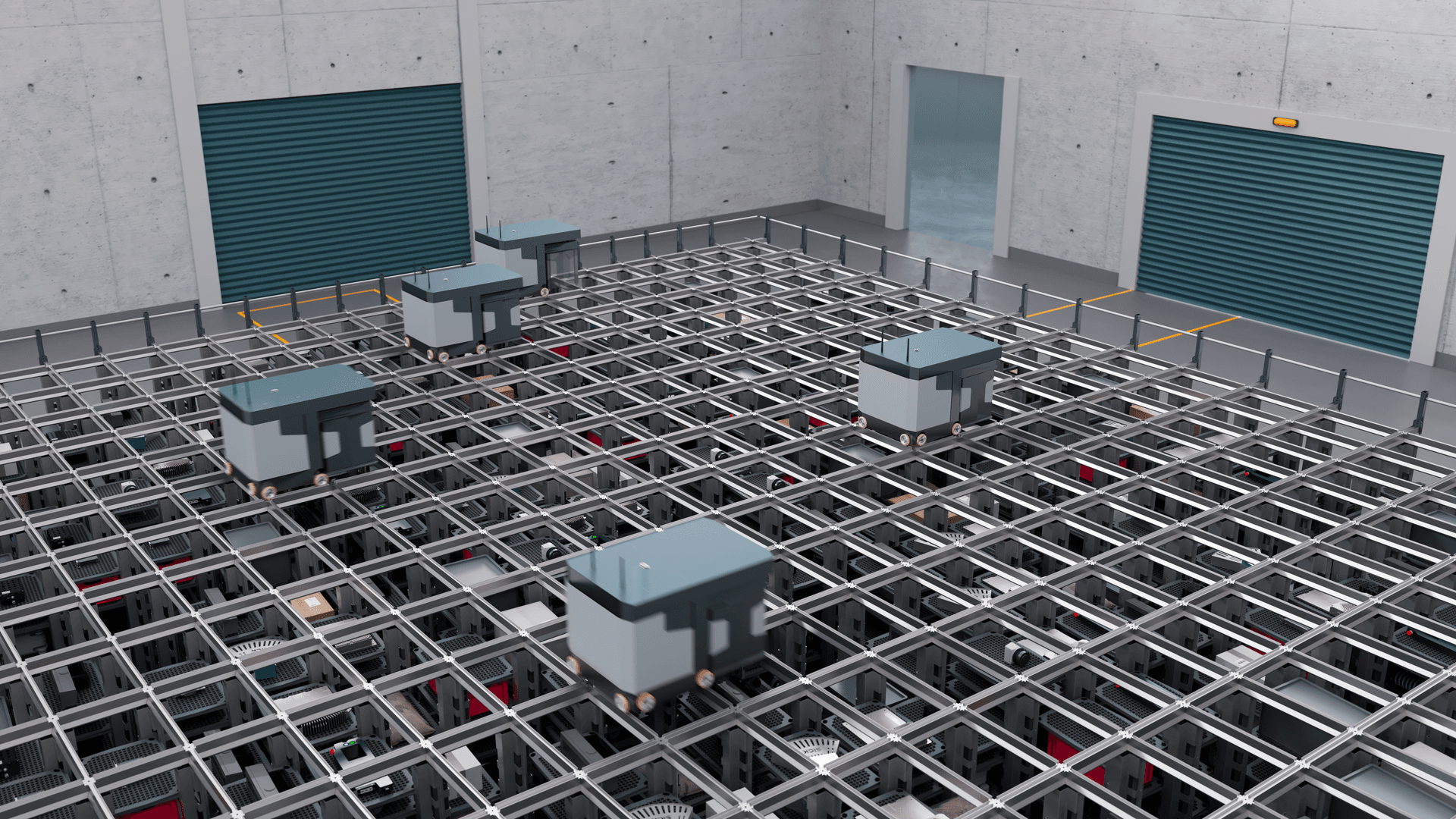
The core idea of Cube Storage systems is to fit as many bins as possible into the available warehouse space. To achieve this, bins are typically stored densely side by side and stacked on top of one another. How the robots access them varies depending on the design. In the most widespread variant ("Top-Loaded"), robots travel on rails above the storage block and retrieve bins from the top. In other variants, they move through the storage block or underneath it. Depending on the process, the system delivers the required bins to workstations according to the goods-to-person principle or transfers them to external systems.
When is Cube Storage worthwhile?
Cube Storage is most worthwhile when you are running up against a concrete limit with a broad range of small parts. Perhaps your warehouse space is no longer sufficient to support further growth. Perhaps your team spends so much time walking during picking that additional orders can only be handled by hiring more staff. What matters is what share of your order lines you can cover with the items that are suited to the cube.
It helps to look at the range per bin. If 40 units of an item fit in one bin and you pick an average of ten units per day, one fill lasts four days. If only four units fit and you need eight per day, it barely lasts half a day. Both items physically fit in the cube. The second one, however, generates significantly more replenishment work. The same applies to fast movers: whether an item is frequently picked individually or mostly leaves the warehouse as a full carton makes a big difference for cost efficiency.
How does AutoStore work?
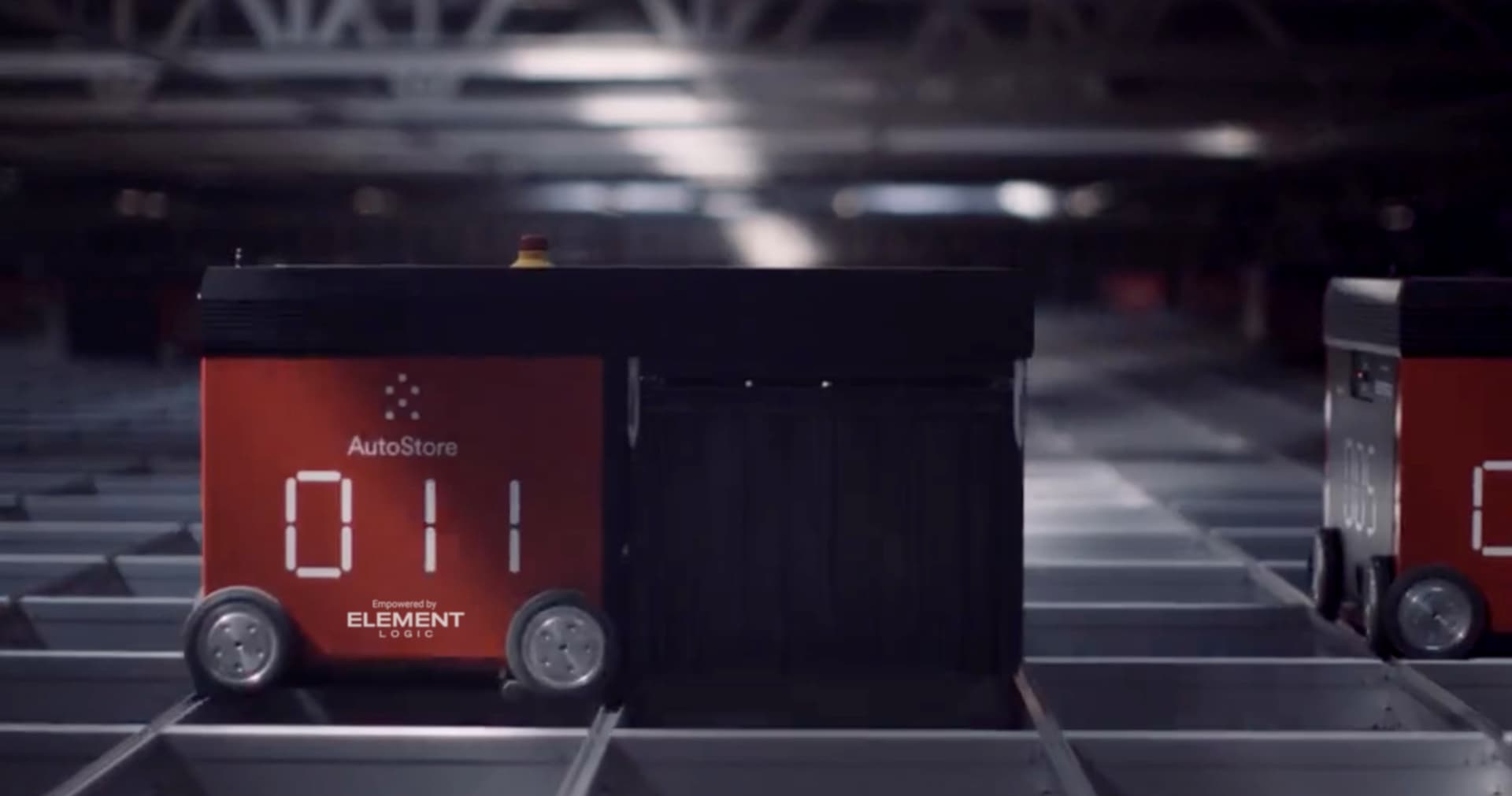
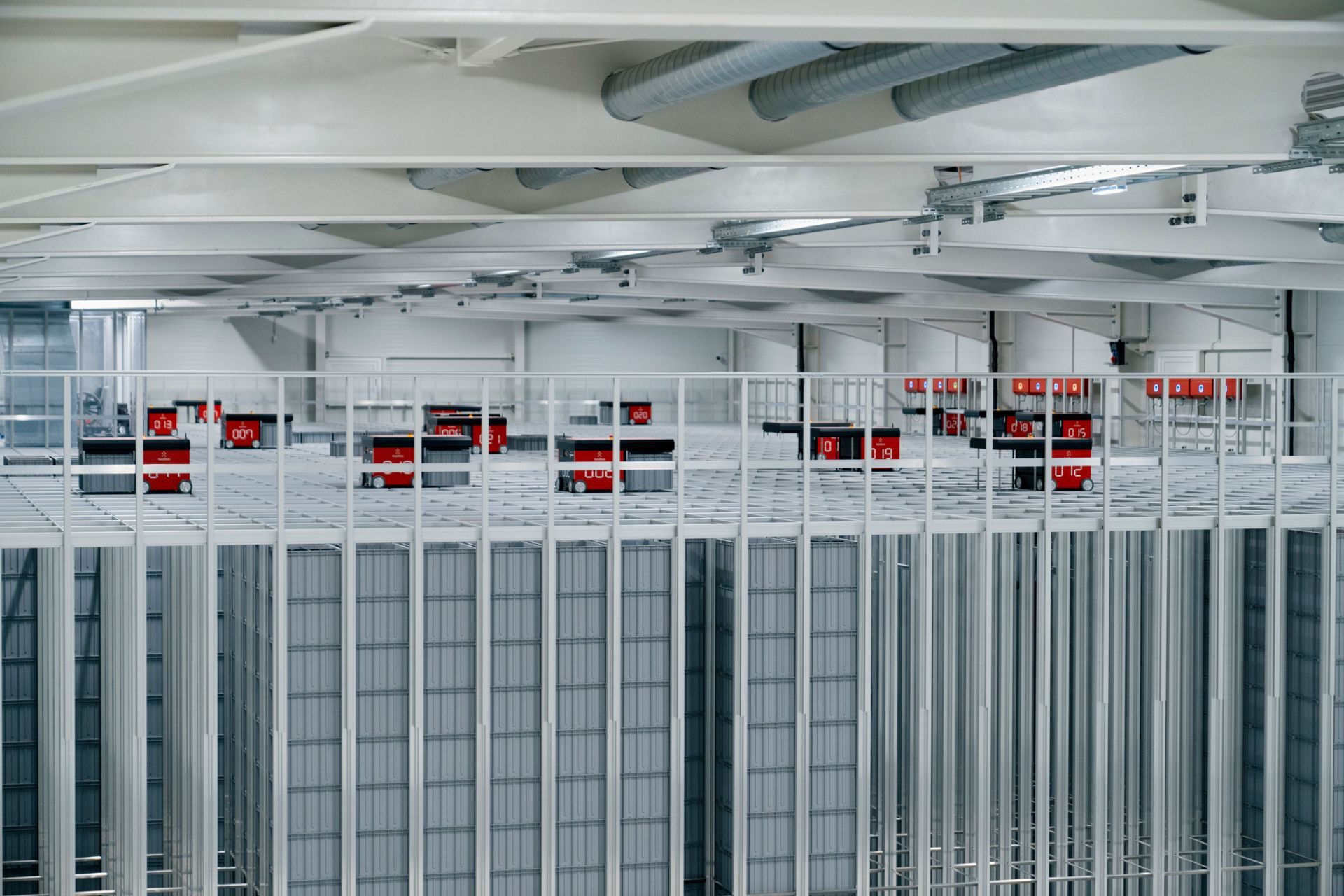
AutoStore has shaped Cube Storage as a warehousing technology. Bins are stored densely side by side and stacked in a grid structure called the Grid. Robots travel on rails on top of the Grid and lift out the requested bin. If it is located deeper in the stack, they must first relocate the bins above it. They then bring the required bin to a workstation, the Port, where goods are picked or replenished.
How well this principle suits your warehouse therefore also depends on which bins you need and when. If many orders arrive shortly before the shipping cut-off, the system must deliver the right bins within a narrow time window. A daily average barely reflects this requirement.
What alternatives to AutoStore are there?
Alternatives to AutoStore include the PowerCube by Jungheinrich, Gridstore, the Ocado Storage and Retrieval System and DIVE by VOLUME, among others. The systems differ primarily in how they access stored goods. With the PowerCube, shuttles travel beneath the bin stacks. DIVE distributes bins across multiple levels, keeping individual stacks shallower. Other vendors move robots through the storage structure, relocate multiple bins at once, or use trays to allow components to be accessed from several sides.
| Vendor / System | What sets the approach apart |
|---|---|
| Jungheinrich PowerCube | Shuttles travel beneath the bin stacks and access the bins from below. |
| VOLUME DIVE | The system distributes bins across multiple levels with shallower stacks. This means fewer bins are stacked on top of one another when a bin stored deeper in the stack is needed. |
| Gridstore Robotics | Like AutoStore, Gridstore pursues a bin-based cube concept. The brand belongs to the GEBHARDT Group through an investment company. A publicly documented reference installation has been in operation since 2023. |
| Ocado Storage and Retrieval System (OSRS) | Ocado has developed its own grid and robot platform for high throughput. With On-Grid Robotic Pick, individual items can be picked and packed robotically directly on the Grid. |
| GEBHARDT Versastore and Upstream | Versastore stores goods on trays and adapts the storage height to the load. Access from multiple sides is of interest, for example, for production supply. Upstream combines shuttle levels with a robot level for transfer and sequencing. For Upstream, the report lists few public customer references to date. |
| Attabotics / LaFayette Systems | The robots move horizontally and vertically within the storage structure. Part of the volume serves as a travel path, enabling more direct access to the goods. Following the restructuring of Attabotics, the technology is being continued under LaFayette Systems. |
| Urbx | The system uses a tower structure in which vertical and horizontal transport movements are separated. |
| Intellistore | The concept combines the buffering of bins with the handling of entire stacks to facilitate access to the requested bins. |
| Martistel | The approach involves moving multiple bins or partial stacks together. Sorting and staging in the required sequence is also brought into the storage structure. |
| Pingspace Matrix | Pingspace modifies the arrangement of bin stacks and the lifting mechanism. The Matrix concept examines, among other things, how multiple stacks can fit within the footprint of a conventional grid position. |
| Cellgo | Cellgo pursues a modular concept for smaller and medium-sized applications. |
| Blue Robot | Blue Robot has developed a compact cube system. The report attributes the first installations to the years 2020/21. |
| Instock | Instock combines a three-dimensional goods-to-person system with a service model. This also sets apart the way in which operators obtain the technology. |
| Funtron | The Chinese vendor is developing its own cube platform with grid, robots, workstations and software. |
| TMPLT | The French vendor is among the more recent developments in the Cube Storage market. |
Which Cube Storage system suits your warehouse?
The most meaningful comparison is one where all vendors accommodate the same inventory in the same hall layout and process the same orders. Provide them with item dimensions, weights, stock quantities and the time-based distribution of your order lines. This allows you to understand how many bins, robots and workstations each Solution requires for your needs.
Then have the vendors simulate a typical peak day. Can the system fulfil the orders by the shipping cut-off while replenishment is being stored at the same time? How does performance change as your range grows? Pay particular attention to what the vendor reports as throughput. A bin presented, a unit retrieved and a fully processed order are different metrics. For the final acceptance test, it should be clearly defined what performance is promised under which conditions.
What does an AutoStore system cost?
The costs of an AutoStore project depend on the required storage capacity, the throughput and how the system integrates into your existing warehouse. On top of the price for the Grid, robots and workstations, the scope of supply may include bins and dividers, conveyor technology, installation, software licences and the connection to your warehouse management system. In an existing building, adaptations to the floor or fire protection may also carry significant weight.
For a fair cost comparison, it is therefore worth looking at the scope of supply and the years following commissioning. Are the workstations fully equipped? What costs apply for maintenance, spare parts and software? And what is the actual economic benefit of the space gained? If it allows you to avoid a building extension, the same saved square metre has a different value than a space that subsequently stands empty.
Who plans and delivers a Cube Storage project?
As the operator, you define together with warehouse operations and IT which problem the system is to solve and what performance it must deliver. For AutoStore, integrators such as Kardex or Element Logic handle the design and integration into operations. This also covers how orders from the warehouse management system reach the cube and how goods travel from the workstation onward to packing or dispatch.
When selecting an integrator, it is worth visiting a warehouse with a similar order profile. Ask the people on site how the system performs on peak days, how quickly they receive support when disruptions occur, and which assumptions from the planning phase have been confirmed in day-to-day operations.
